Superside
Superside
2023 – 2026
Senior Product Designer
Remote
Starting from the recently launched Service Catalog, which was a huge step towards information-rich briefs, we saw that it was only the tip of the iceberg. Even though briefs started to arrive as a complete and ready to execute documents, we heard from customers that they still needed to repeat themselves on every project. They expected our Project Managers and Creatives to know about the brand and recurrent work, acting more proactively and autonomously.
This context felt like the perfect opportunity to introduce our first set of AI tools, and position the business as an AI-first company following the emergence of a new era in technology, business, and products.
As AI became a serious conversation inside the company, closing that gap called for two stages:
The team started with the generative tool, treating it as the fastest way to learn what personalization actually needed to account for.
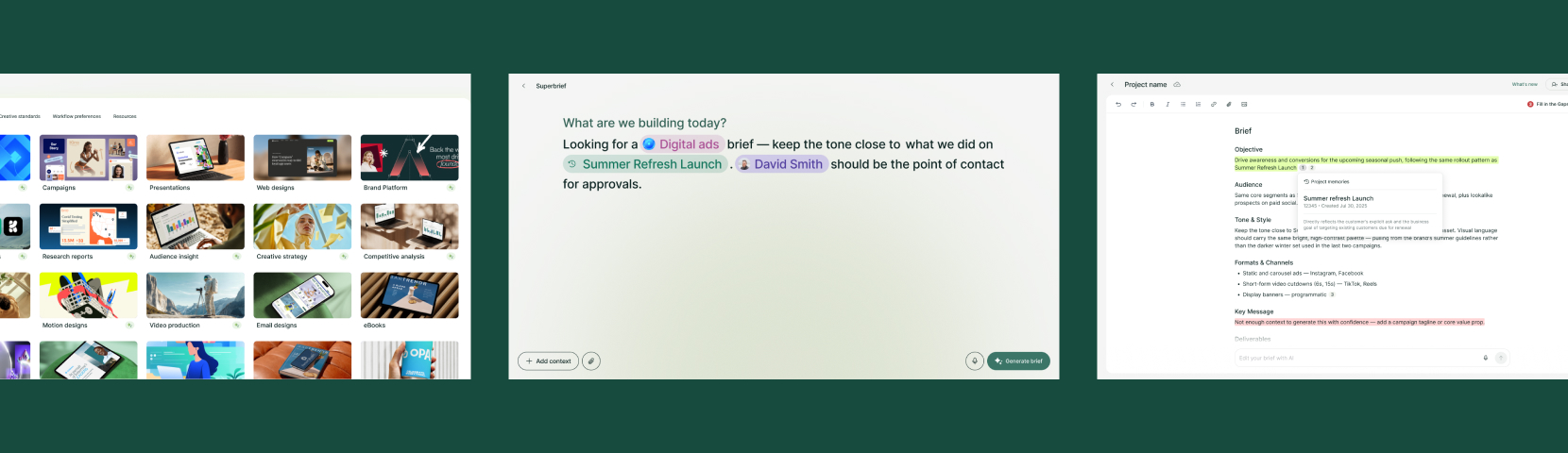
AI Briefing doubled down on what the Service Catalog and custom brief forms started to solve: the blank canvas anxiety was gone. Customer interviews conducted prior to and after the launch, along with usage data, proved this was the right direction. From simple and not-so-structured prompts, it was possible to generate an entire brief ready for final edits and submission.
Brand Brain, a knowledge database that contained historic information from customers in multiple categories, came to aggregate even more — not only generating highly customized briefs and serving as context for multiple AI tools yet to come, like on-brand asset generation (Brand Models), but also becoming the biggest selling proposition of the business.
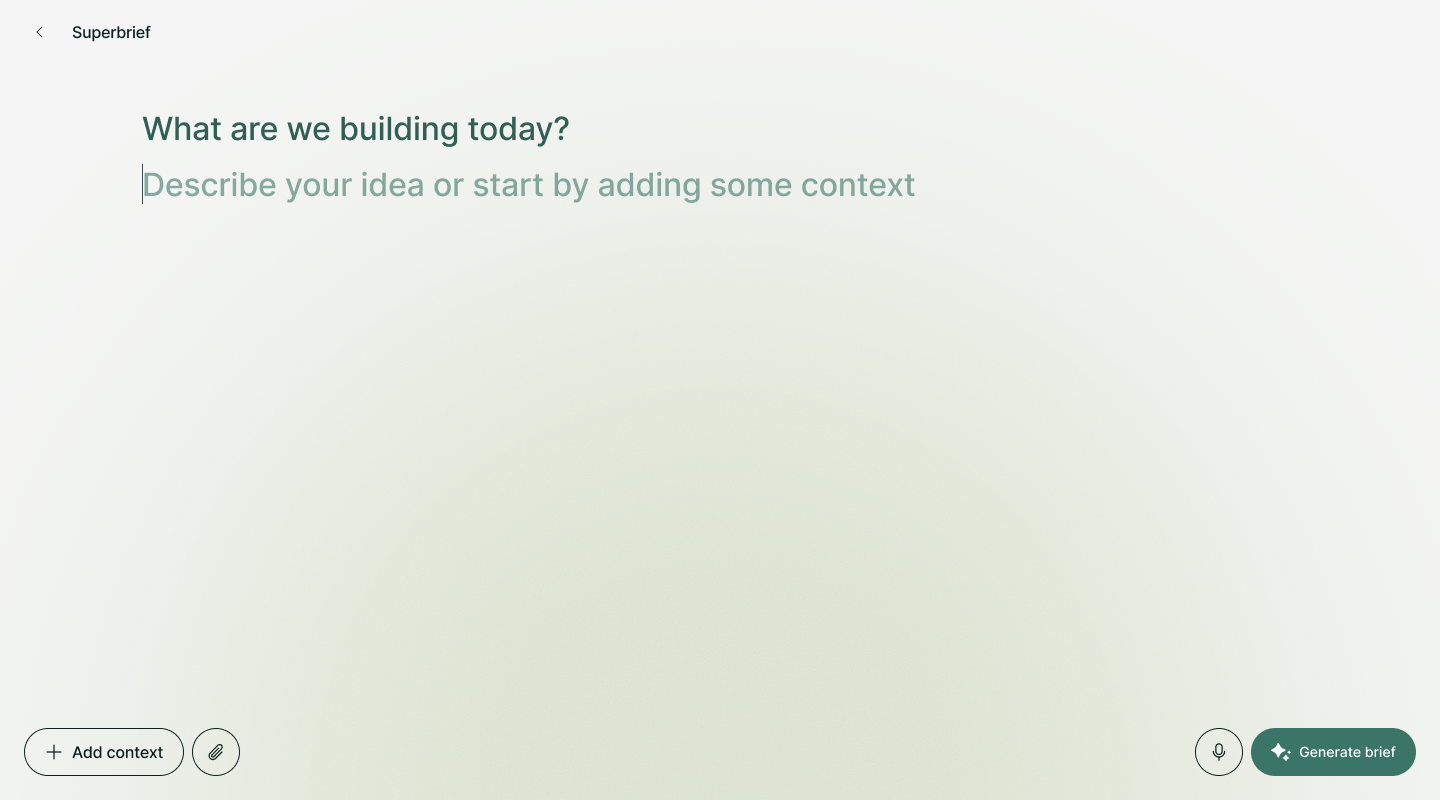
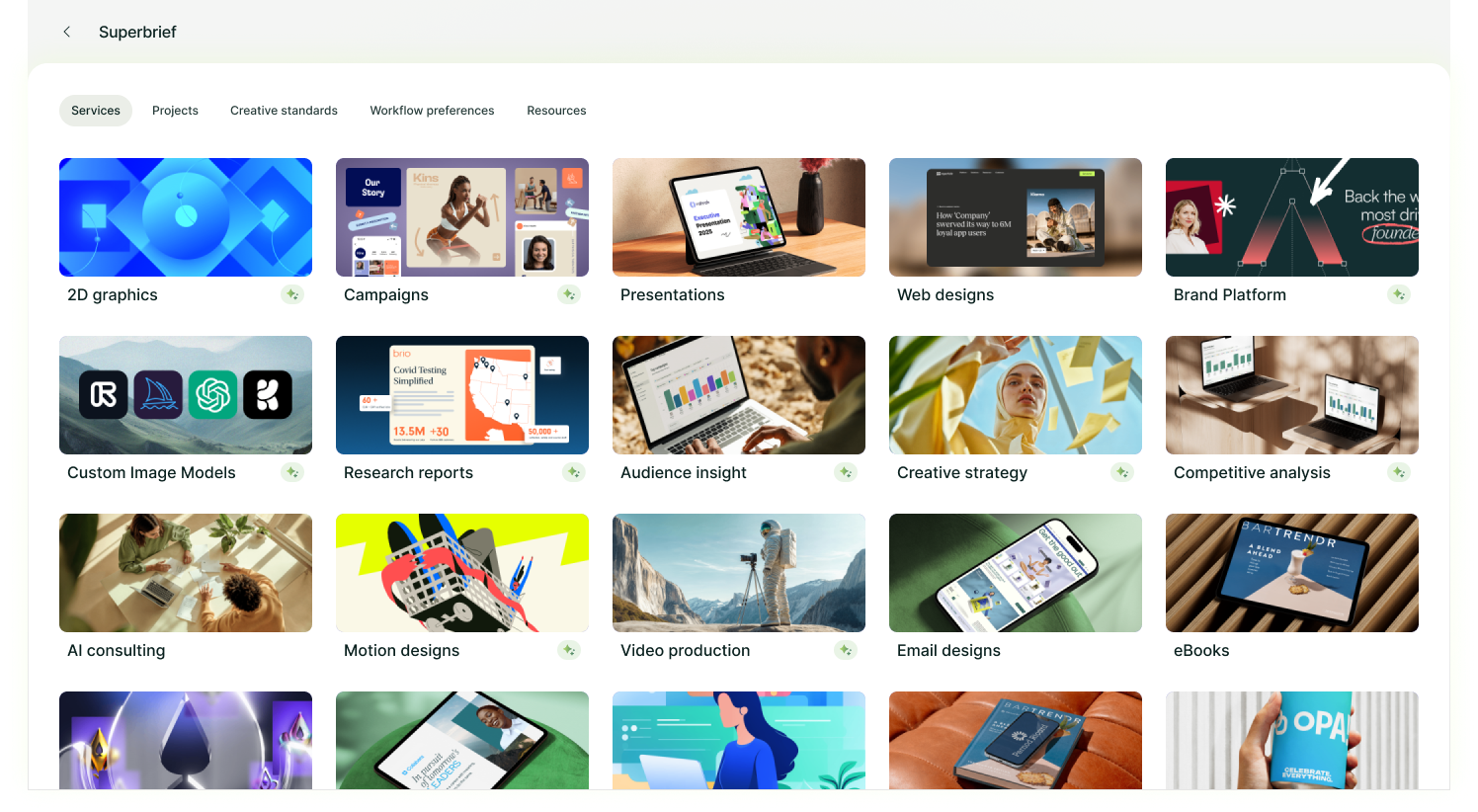
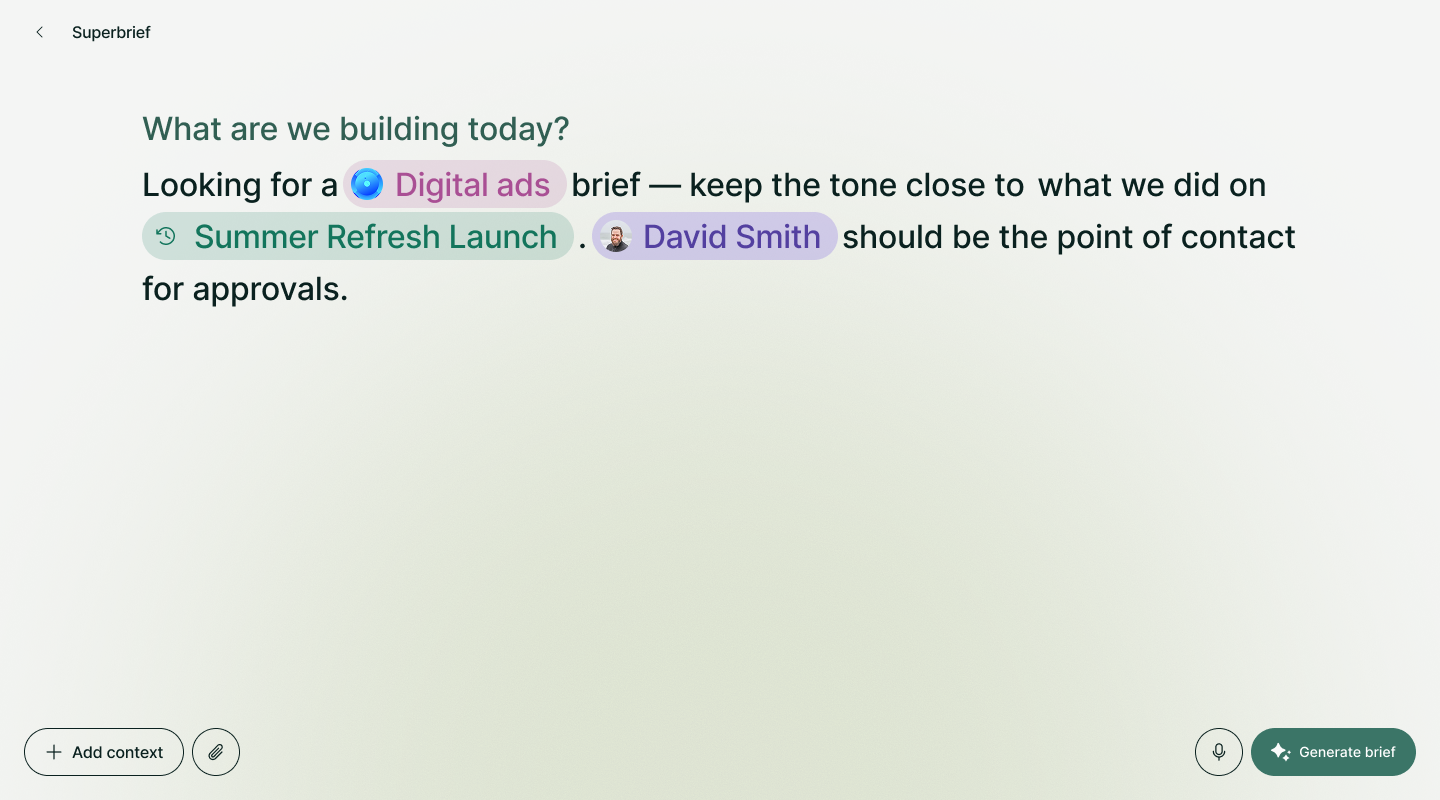
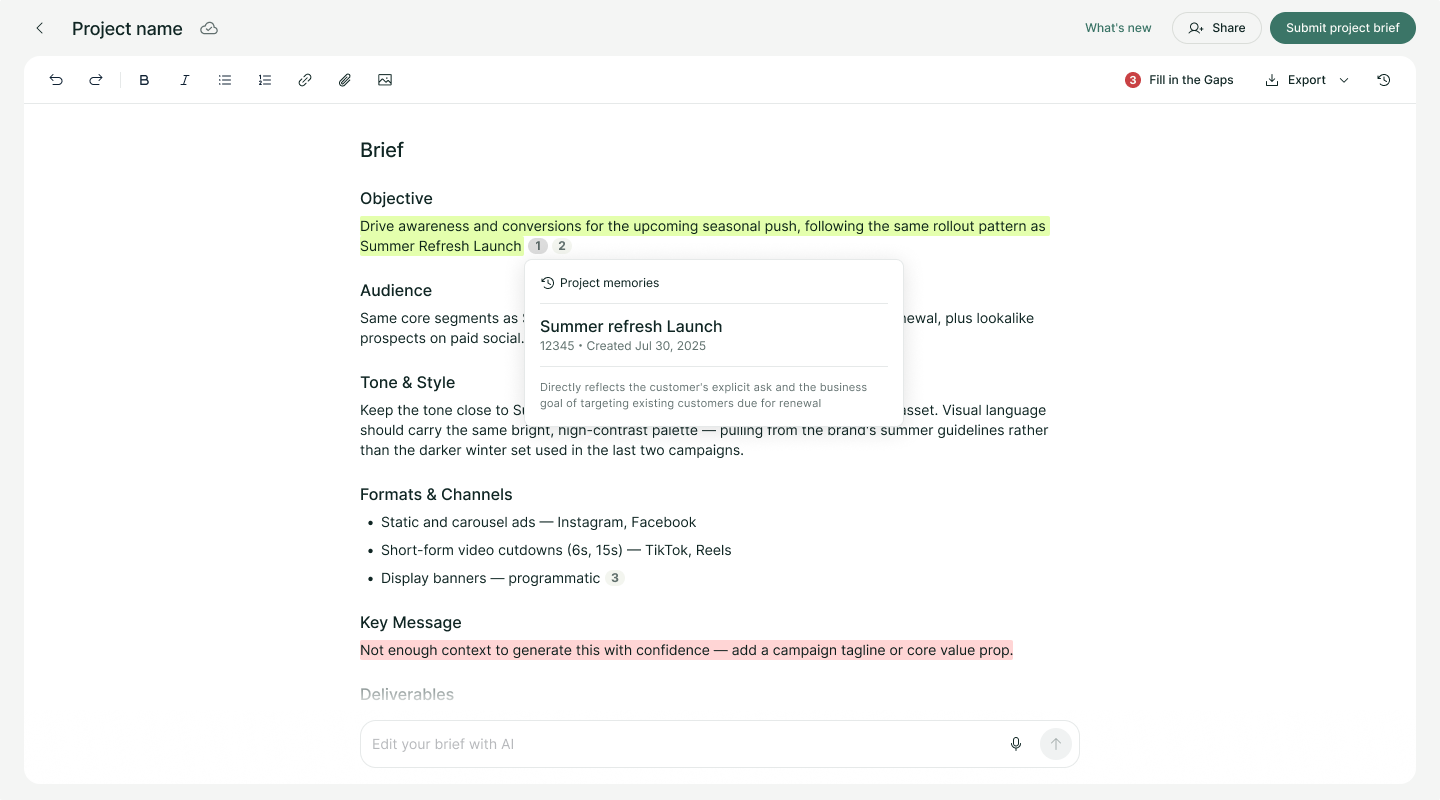
Brand Brain was built as infrastructure for AI agents first, interfaces second — which meant the highest-leverage design decisions weren't visual, they were about trust:
The sequencing taught the team something that's easy to miss in hindsight: breadth and depth aren't sequential trade-offs you can skip past, they're both load-bearing. Shipping a generic tool first wasn't wasted time — it proved, with real usage data, that personalization was the actual constraint, not a nice-to-have. That validation made the case for Brand Brain far stronger than it would have been as an untested proposal. The lesson the team carried forward: sometimes the fastest way to prove a foundational bet is right is to first ship the thing that reveals why it's necessary.
